• Pedestrians crossing at a marked crosswalk in a suburban neighborhood.

    Ventura County Bus Stop Assessment

    PROJECT DESCRIPTION

    The Ventura County Transportation Commission is leading an assessment of Ventura County’s bus stops. This assessment will evaluate the amenities provided at each of Ventura County’s almost 1,200 bus stops, including shelters and benches, for all of Ventura County’s nine transit systems. The study will analyze barriers to getting to bus stops, like narrow sidewalks or missing crosswalks, and it will develop a prioritization system to help direct funding towards future stop improvements, such as adding new shelters, real time arrival displays, and making ADA accessibility improvements.

    INTERACTIVE BUS STOP INVENTORY MAP

    Use this interactive map to explore bus stops and transit stations across Ventura County and share location-specific feedback on transit stop amenities. How to use the map:

    1. Zoom in or search to find a specific bus stop or station.
    2. Click Add Marker on the bottom right of the map and place the marker near your bus stop.
    3. Leave comments with your thoughts on this specific bus stop, or identify issues such as missing shelters, seating, lighting, or accessibility concerns.

    Your feedback will help Ventura County Transportation Commission (VCTC) better understand current conditions and prioritize improvements. All stops shown on the map are part of an ongoing countywide inventory and assessment effort.

    Project Schedule

    • Fall 2025: Bus Stop Inventory
    • November-December 2025: Public Engagement and Partner Agency Coordination
    • January 2026: Bus Stop Prioritization System
    • April 2026: Final Bus Stop Assessment Report
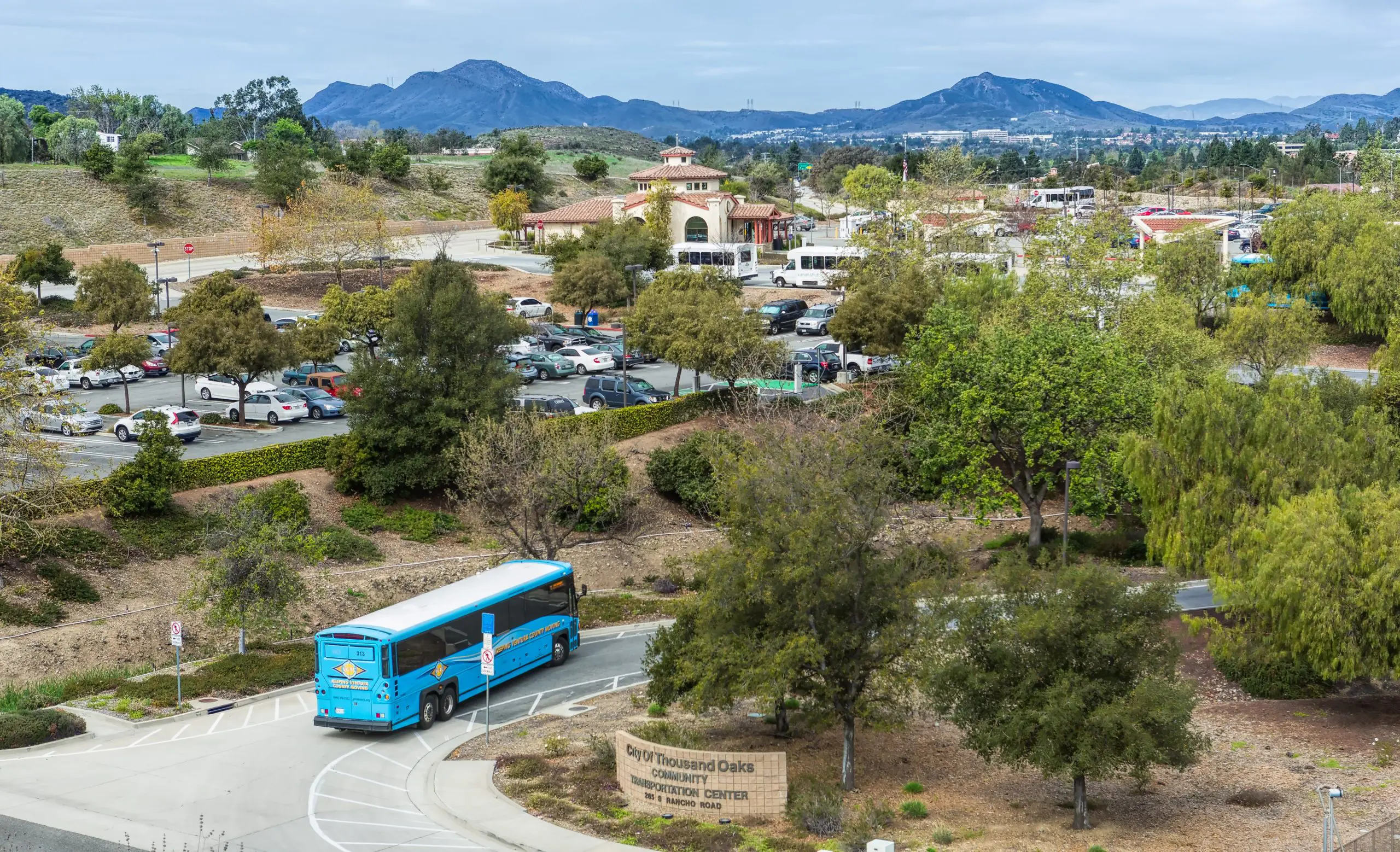
  • A blue bus parked in a scenic area with trees and mountains in the background at Goventura Staging.

    Unmet Transit Needs

    UNMET TRANSIT NEEDS FY 26/27

    The Ventura County Transportation Commission (VCTC) has begun the Fiscal Year 2026–2027 Unmet Transit Needs review process and is now accepting public input.

    The Unmet Transit Needs process provides an opportunity for the public to comment on transit services that are needed or could be improved within Ventura County. All comments received during this cycle will be reviewed and considered as part of VCTC’s annual transit planning process.

    Information on public hearings, deadlines, and final findings will be posted to this page as the process moves forward.


    Community Listening Sessions

    Join us to share your feedback in person or virtually.

    Monday, January 12, 2026
    Grant R. Brimhall Library – 6:00pm
    1401 E. Janss Road, Thousand Oaks, CA 91362


    Thursday, January 15, 2026
    Virtual – 12:00pm
    Join Meeting (http://bit.ly/4ro6Os0)


    Tuesday, January 20, 2026
    Fillmore Library – 6:00pm
    502 2nd St. Fillmore, CA 93015


    Wednesday, January 21, 2026
    Camarillo Library – 6:00pm
    4101 Las Posas Road, Camarillo, CA 93010


    Public Hearing

    Friday, February 6, 2026
    Camarillo City Hall – 9:00am
    601 Carmen Drive, Camarillo, CA 93010

    What is unmet transit needs?

    Each year, VCTC staff facilitates a transit needs assessment to determine if additional areas need to be served by public transit in cities with populations of less than 100,000 (Camarillo, Moorpark, Fillmore and Santa Paula plus Thousand Oaks.) The assessment is done before VCTC allows cities to spend Transportation Development Act funds on streets and roads.

    An unmet need can be:

    • Public transit services not currently provided to reach employment, medical assistance, food, clothing, education programs, and social services such as health care or county welfare. Service must be needed by and benefit the general public.
    • Service expansions including new routes, significant modifications to existing routes and major increases in service hours and frequency.

    How it works

    To be considered an unmet transit need, the request must have “substantial” community support, with a threshold of 15 requests for general public service and/or 10 requests for disabled service, and be “reasonable to meet.”

    VCTC analyzes all comments submitted to determine if they meet these qualifications. To be considered reasonable to meet, the proposed service:

    • Cannot cause reductions in existing transit services that have an equal or higher priority
    • Must be in response to an existing rather than future transit need
    • Must be able to be provided with the existing fleet or under contract to a private provider (that has additional fleet capacity)
    • Can safely be provided (there are adequate roadways to accommodate transit vehicles)
    • Will not unduly affect the operator’s ability to maintain the required passenger fare ratio for its system as a whole
    • Will meet the scheduled passenger fare ratio standards
    • Does not have fewer estimated passengers per hour than the system-wide average (after three years)

    Additionally, unmet transit needs exclude:

    • Minor route changes
    • Bus stop changes
    • Minor changes to schedules
    • Service for groups or individuals that will not benefit the general public
    • Comments about vehicles or facilities
    • Comments about driver performance or organizational structure
    • Requests for better coordination
    • Requests for reduced fares or changes to fare restrictions
    • Improvements funded or scheduled for implementation the following year
    • Future transportation needs
    • Duplication or replacement of existing service

    Though the definition of what constitutes an unmet transit need and is reasonable to meet is admittedly narrow, VCTC strives to use the process to solicit feedback from the public for any transit improvements that could benefit the community. All comments received are provided to the appropriate operator and taken under consideration. A number of transit improvements have been made as a result of comments submitted through the unmet transit needs process.

    Over the last five years, comments received have led to the following improvements to the transportation network:

    • Metrolink Saturday service
    • Extended the Coastal Express route to Camarillo
    • Multiple bus stop improvements
    • Began planning for service between Fillmore and Moorpark
    • Began planning for service to Santa Clarita

    The annual unmet transit needs survey and comment period is held from mid-December to mid-February, with community meetings generally held in January and the public hearing the first Friday in February. However, VCTC takes comments year-round and greatly encourages feedback from the public.
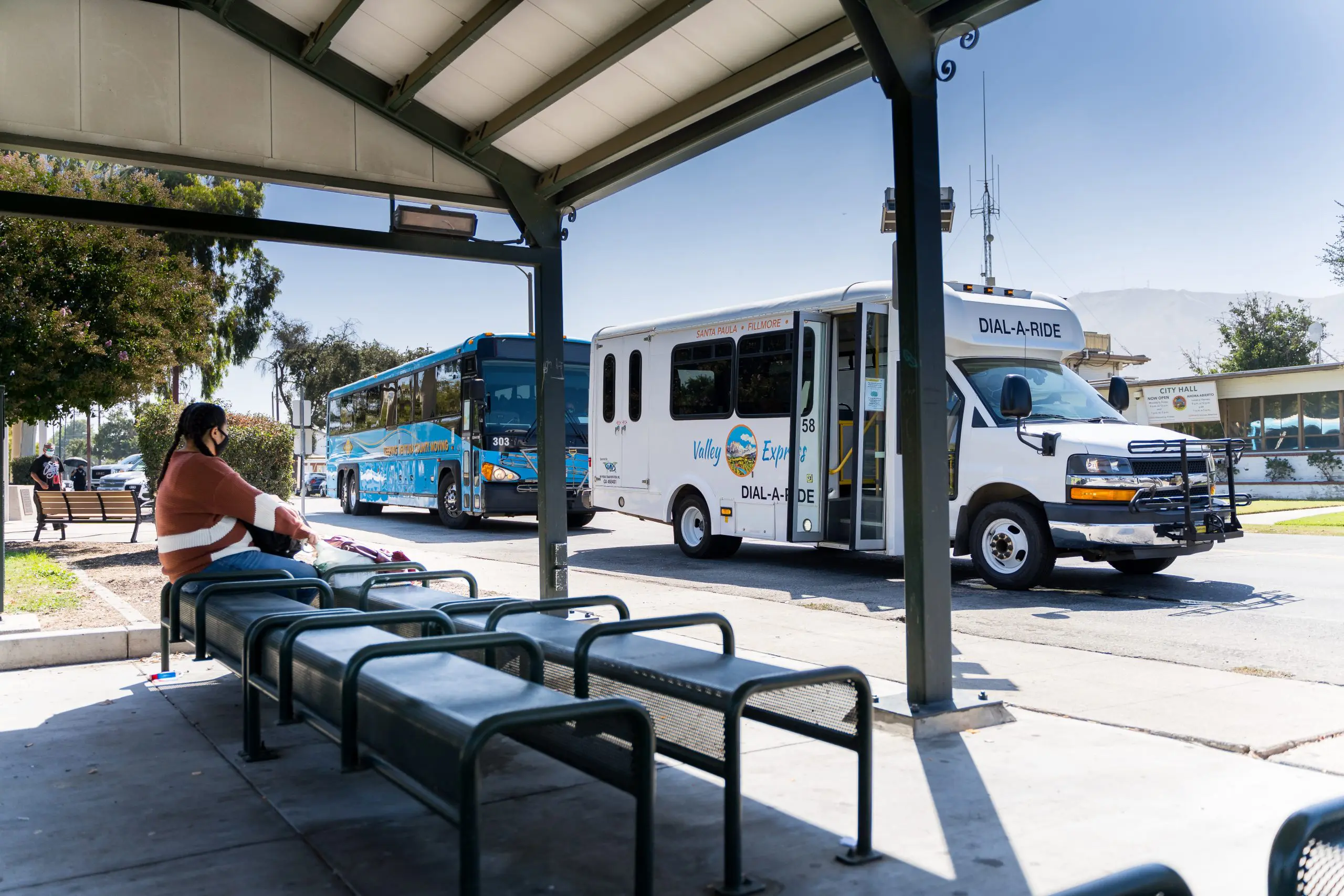
    A bus stop with a woman sitting on a bench, waiting for the bus in Ventura.
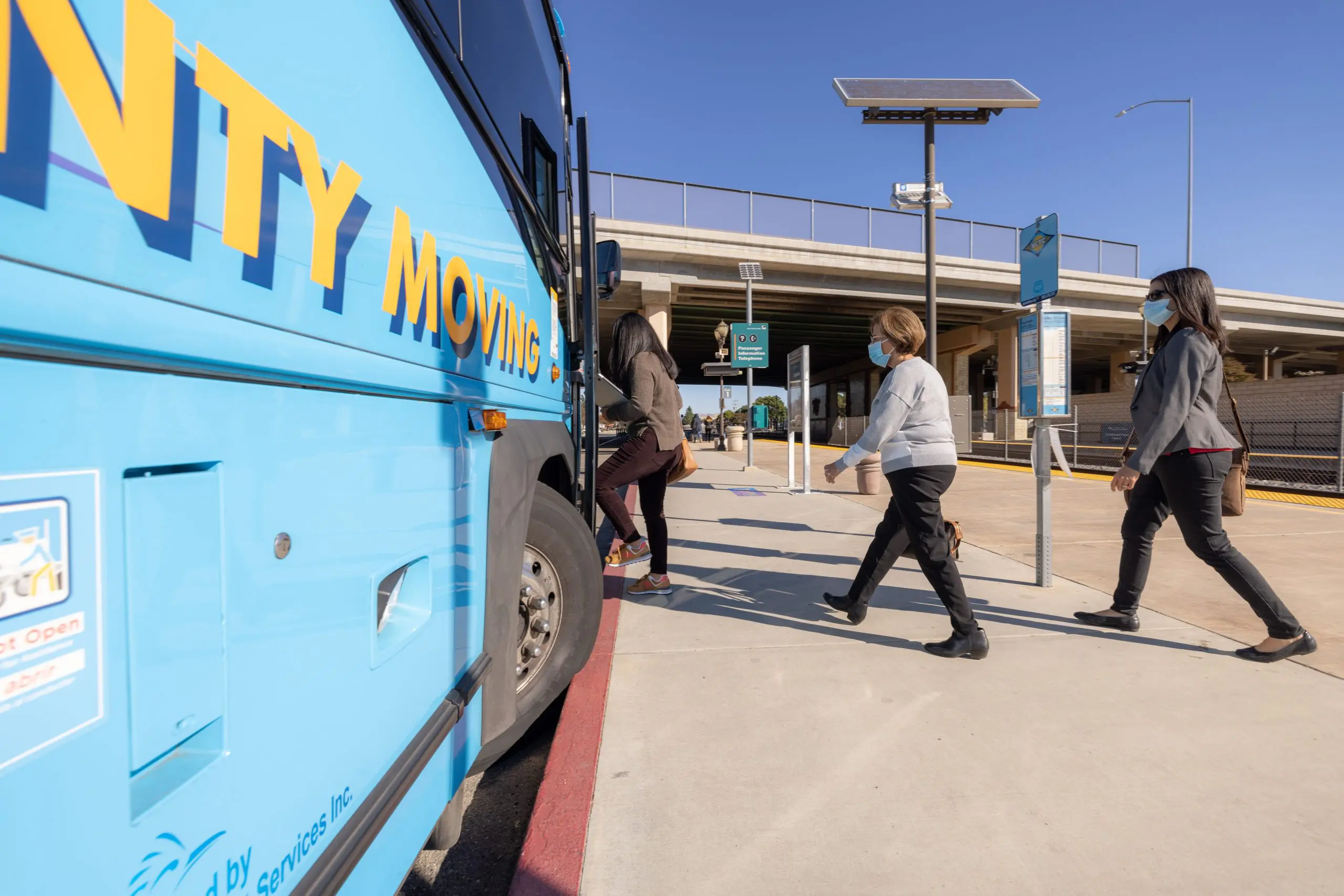
    People boarding a city bus at a transit station in Ventura, California.
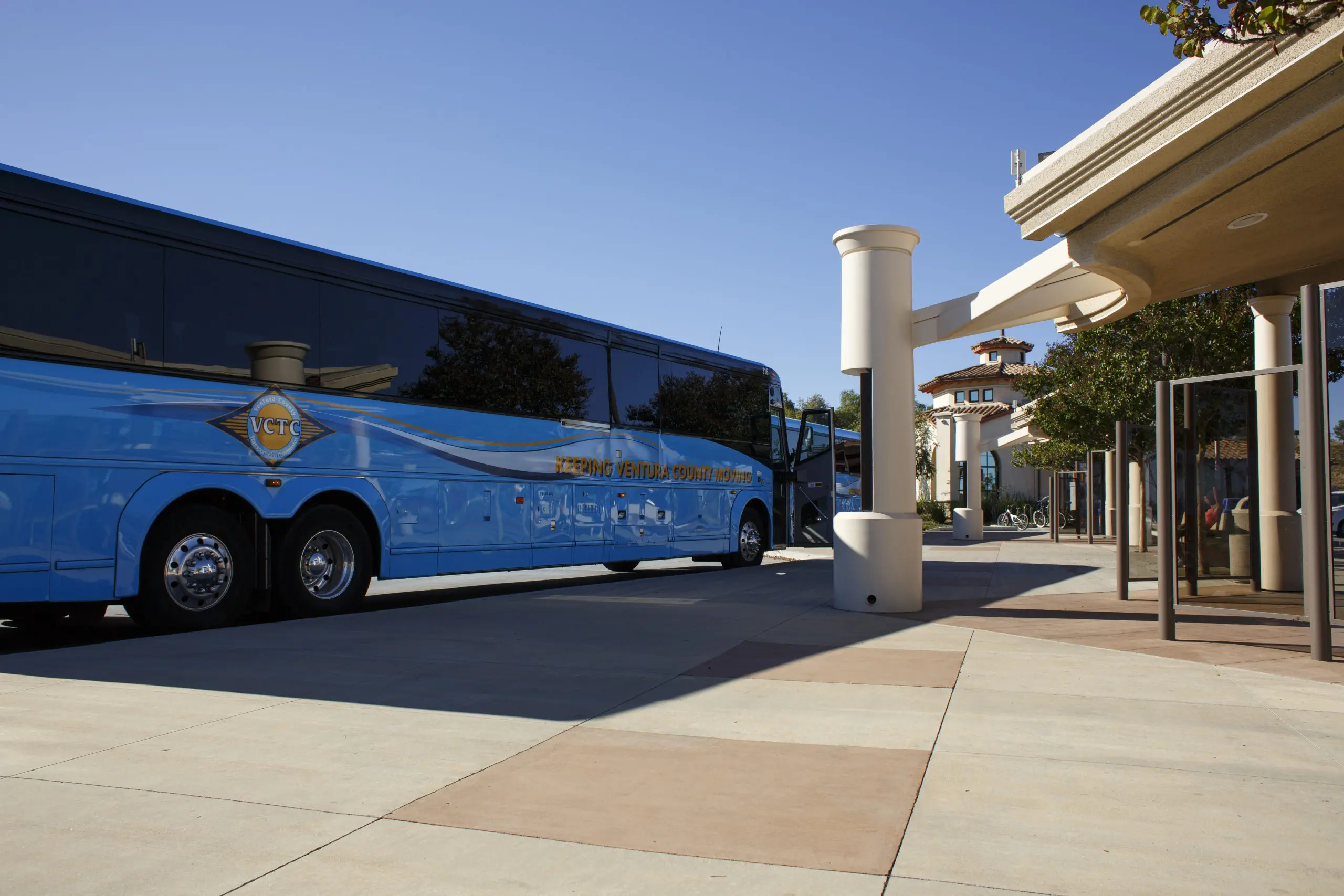
  • VCTC bus parked in front of building

    Transit Integration & Efficiency Study

    PROJECT DESCRIPTION

    The Ventura County Transportation Commission is leading an exploratory effort to identify potential efficiencies in the delivery of quality local and regional bus transit throughout Ventura County.  There are currently nine bus transit systems throughout the County – VCTC Intercity, Gold Coast Transit District, Valley Express Bus, Simi Valley Transit, Camarillo Area Transit, Thousand Oaks Transit, Moorpark City Transit, Ojai Trolley, Kanan Shuttle, and Connect – ECTA InterCity Dial-a-Ride.  Each transit provider is a project partner working alongside VCTC to identify strategies that will most effectively improve passenger experience and better integrate the existing transit services throughout the County.

    This study is a first step at identifying potential opportunities for transit integration and efficiencies in the County. Based on the outcome of the study, VCTC will engage with a broader set of stakeholders to further refine recommendations and establish a path toward implementation.

    PROJECT MILESTONES

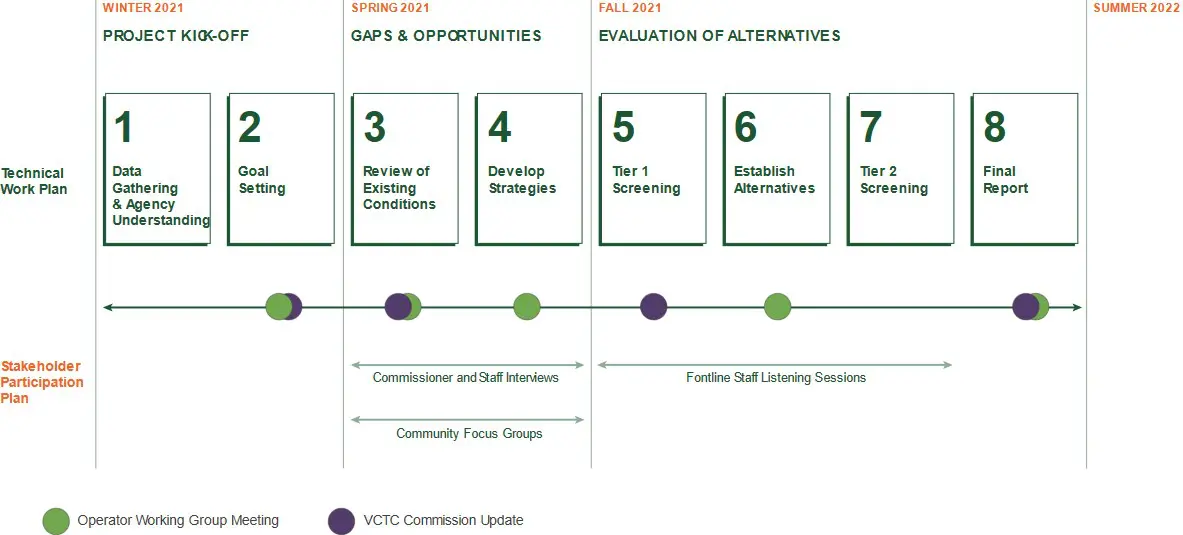
    Project Milestone calendar
  • Ventura County Short Range Transi Plan

    The Ventura County Short Range Transit Plan (SRTP) is a short-range planning document that guides future services, operations, and capital investments in the County over the next ten years. The 2025-2034 SRTP incorporates socioeconomic data, community feedback, and local transit solutions while also placing an emphasis on inclusion of disadvantaged and underserved communities to create a more equitable transit future for all. 

    Document Library

  • https://www.goventura.org/demand-response-integration-plan/

    Demand Response Integration Plan

    As part of the Ventura County Short Range Transit Plan (SRTP), the Ventura County Transportation Commission (VCTC) is working on the Demand Response Integration Plan to explore how local transit providers can work together to make ADA paratransit service more seamless, efficient, and cost-effective.

    Paratransit provides essential transportation service for riders with disabilities, but today each local operator manages its own system. This can make countywide travel challenging, especially when trips cross city or service boundaries. The integration study examined how bringing services together could:

    • Simplify the rider experience with consistent policies and scheduling
    • Improve trip coordination and regional connectivity
    • Identify potential opportunities to achieve cost savings
    • Support more unified data collection, reporting, and planning

    The Demand Response Integration Plan will provide a foundation for decision-makers, riders, and local bus operators to consider how best to move forward. VCTC will continue to work with partners and the community to identify the most effective path to improve the rider experience.

    Document Library

Secret Link