Our Future 101
The Draft EIR/EA is available for public review
Review the Draft Environmental Impact Report / Environmental Assessment from September 30 through 11:59 p.m. on Monday, December 7, 2026. You can comment in writing or at one of five public hearings in November. See the Documents tab for the full report and the Get Involved tab for hearing dates and how to comment.
The Draft EIR/EA is now available for public review
The Draft Environmental Impact Report / Environmental Assessment for the US 101 Improvement Project is now available for public review. Comments are due by 11:59 p.m. on Monday, December 7, 2026.
Five public hearings will be held in November: Thousand Oaks (Nov. 4), Oxnard (Nov. 12), online on Zoom (Nov. 14), Camarillo (Nov. 18) and Ventura (Nov. 19).
Moving Ventura County forward
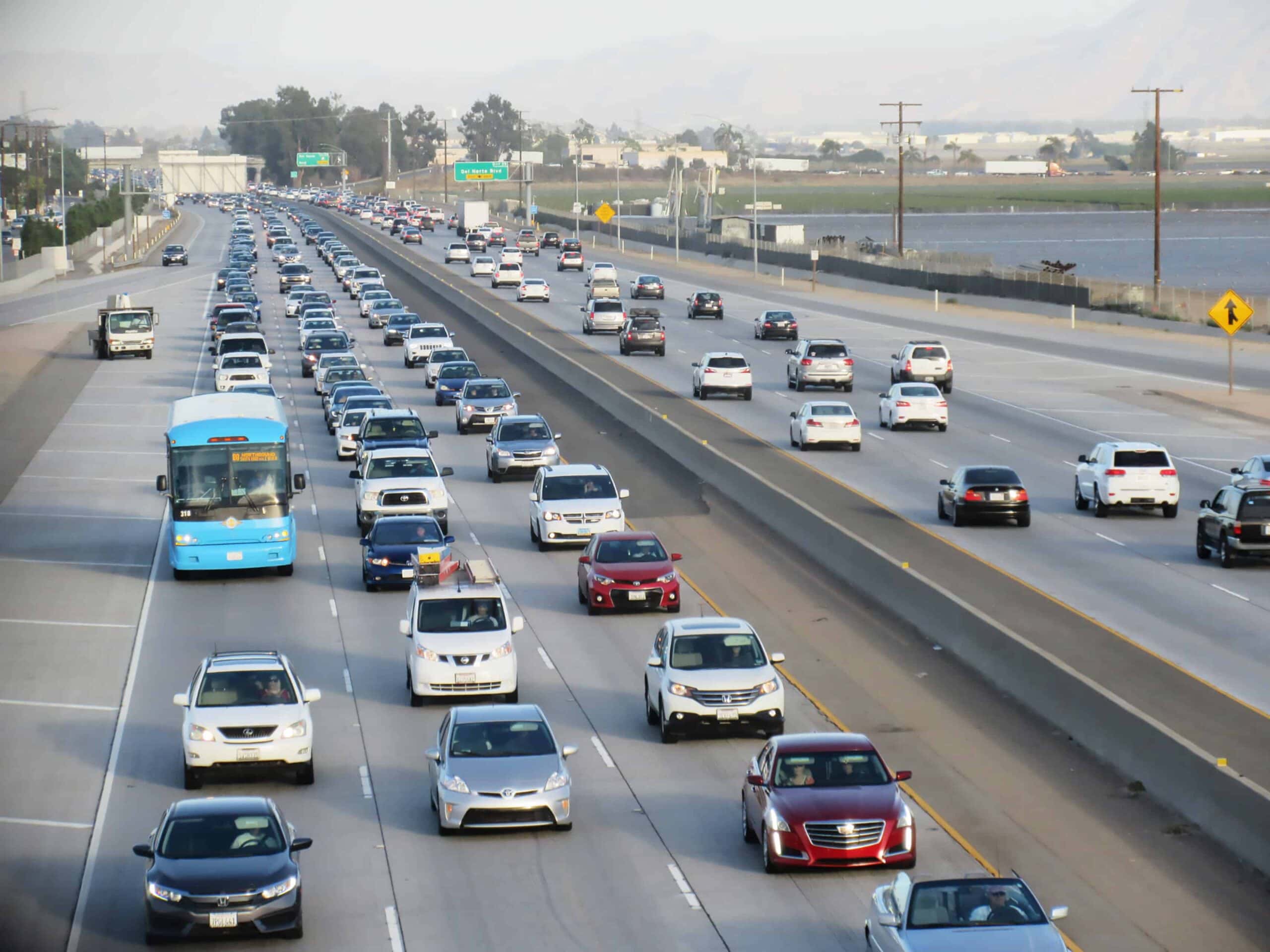
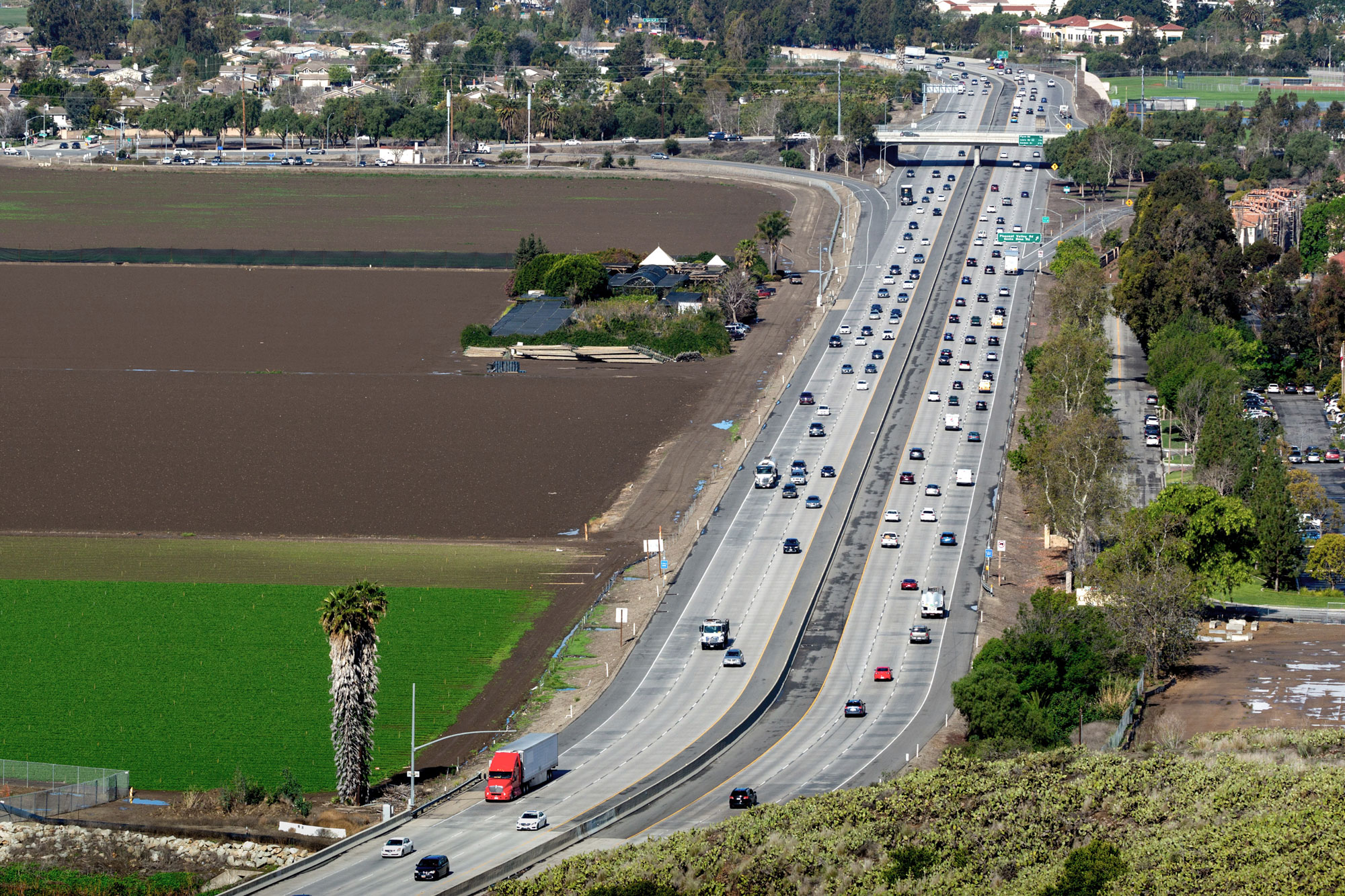
Ventura County. A beautiful place to live, sunshine, beaches, majestic valley oaks, shopping, fragrant fields of strawberries… And traffic.
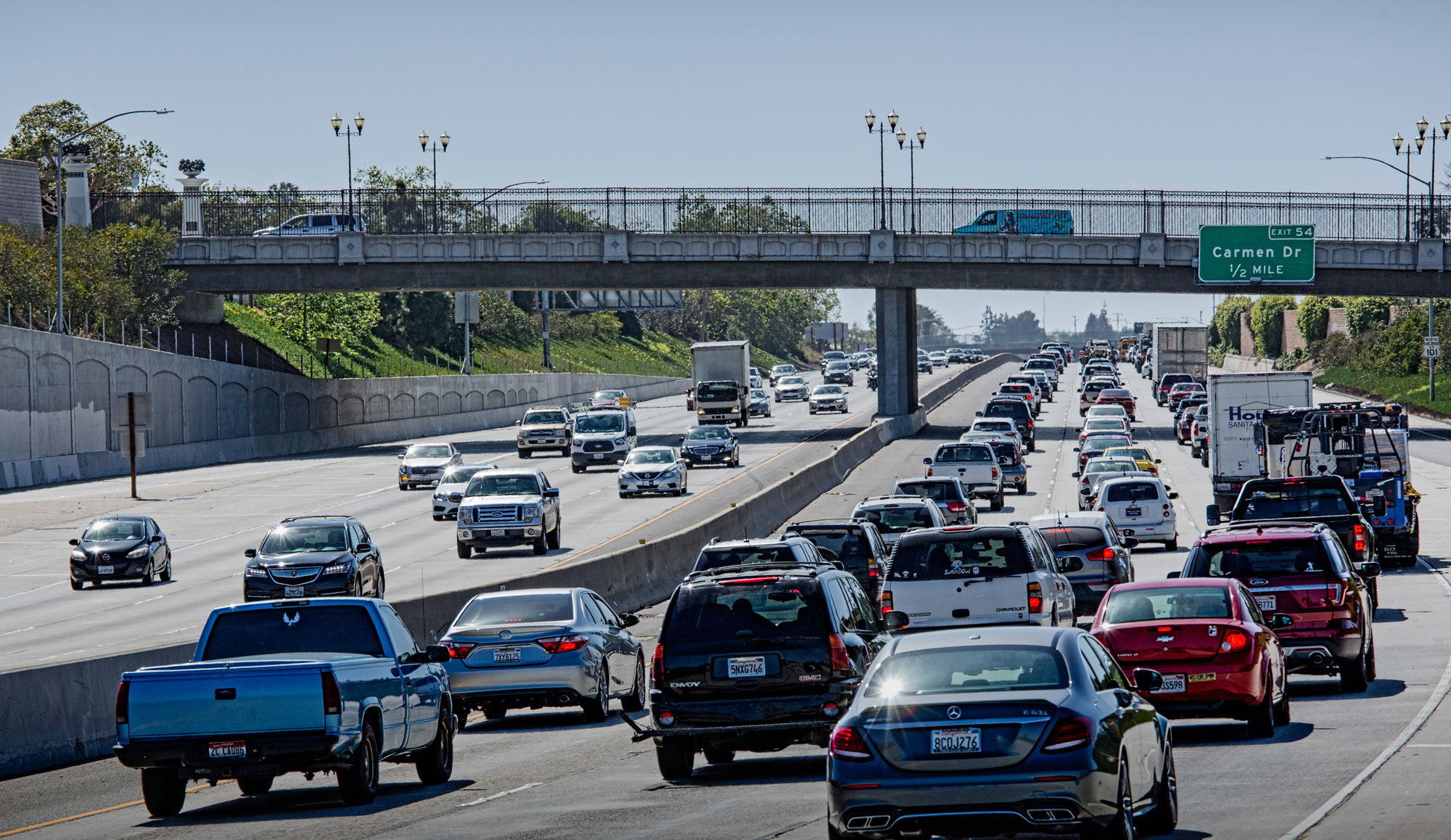
As we look forward, with congestion projected to more than double in the next twenty years, we must take action to preserve our ability to get to work, to conduct business, to play, and to enjoy the quality of life Ventura County residents treasure.
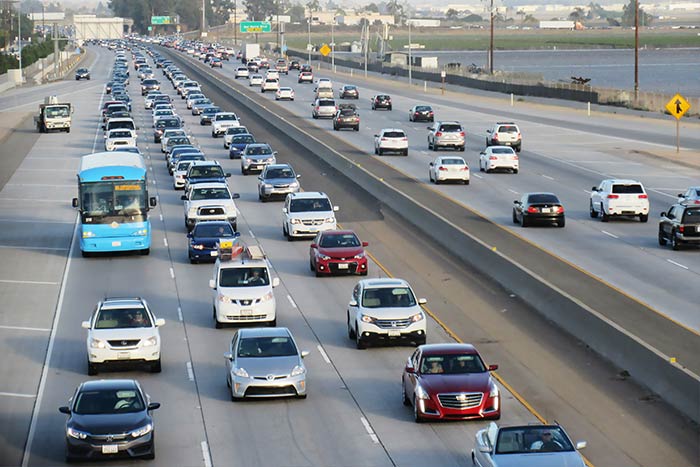
The freeway is congested and getting worse
Why is the 101 so congested?
Commuters? Travelers? No, it’s us, Ventura County drivers. We tend to use the 101 like a main street. We jump on the freeway to cross town to take our kids to school, go to the farmer’s market, and commute to and from work daily, within the county. There are few alternatives for the 101 and the improvements over the years have not kept up with the demands we place on the 101. Congestion is projected to more than double in the next 20 years.
How can the 101 be made better?
Fortunately, help is on the way. The Ventura County Transportation Commission (VCTC), working in partnership with Caltrans and the local cities and the County of Ventura, has taken the lead to identify improvements along this important connection to all we do.
Project purpose
This phase of the project will evaluate and disclose in an environmental document, the benefits and impacts of alternatives that will address the existing and future problems on the 101. To define the specific problems of the corridor, the environmental document includes a Purpose statement and a Need statement that describes what the preferred alternative needs to achieve to be successful. The early planning documents include a preliminary statement of Purpose and Need. These will be refined and enhanced as the project moves through later stages of project development.
Project purpose
Improve Traffic Conditions by:
- Improving Trip Reliability
- Achieve Regional HOV Connectivity
- Support Regional Prosperity
- Improve Efficiency of Public Transit System
The need
- Improve Trip Reliability and Traffic Operations
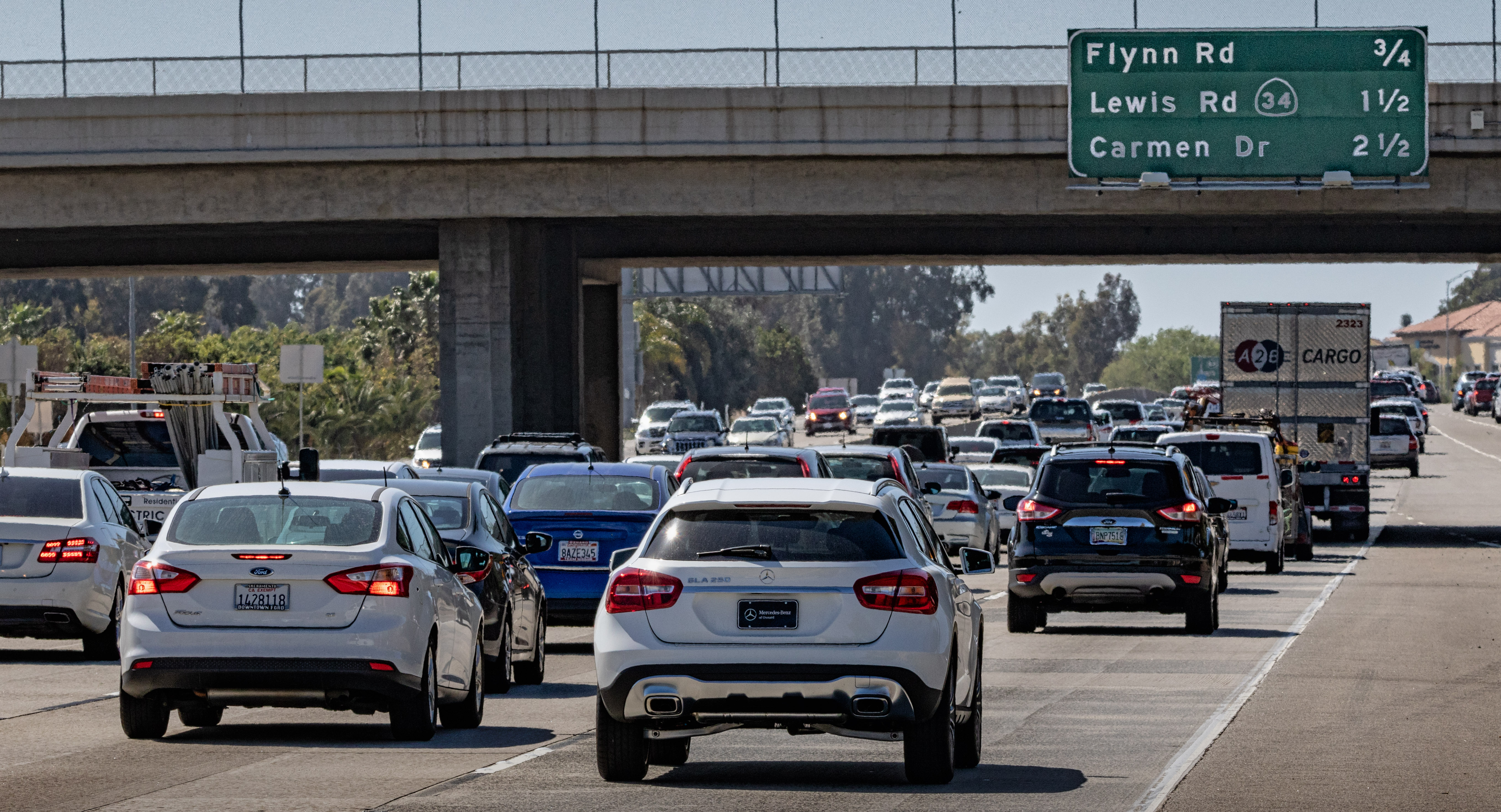
Overview and objectives
Preserving the quality of life and moving Ventura County forward. That’s the commitment VCTC makes to the communities of Ventura County.
- Continually improving the local transportation system
- Maintaining our ranking as one of the best places to live
- Giving residents easy access to local travel
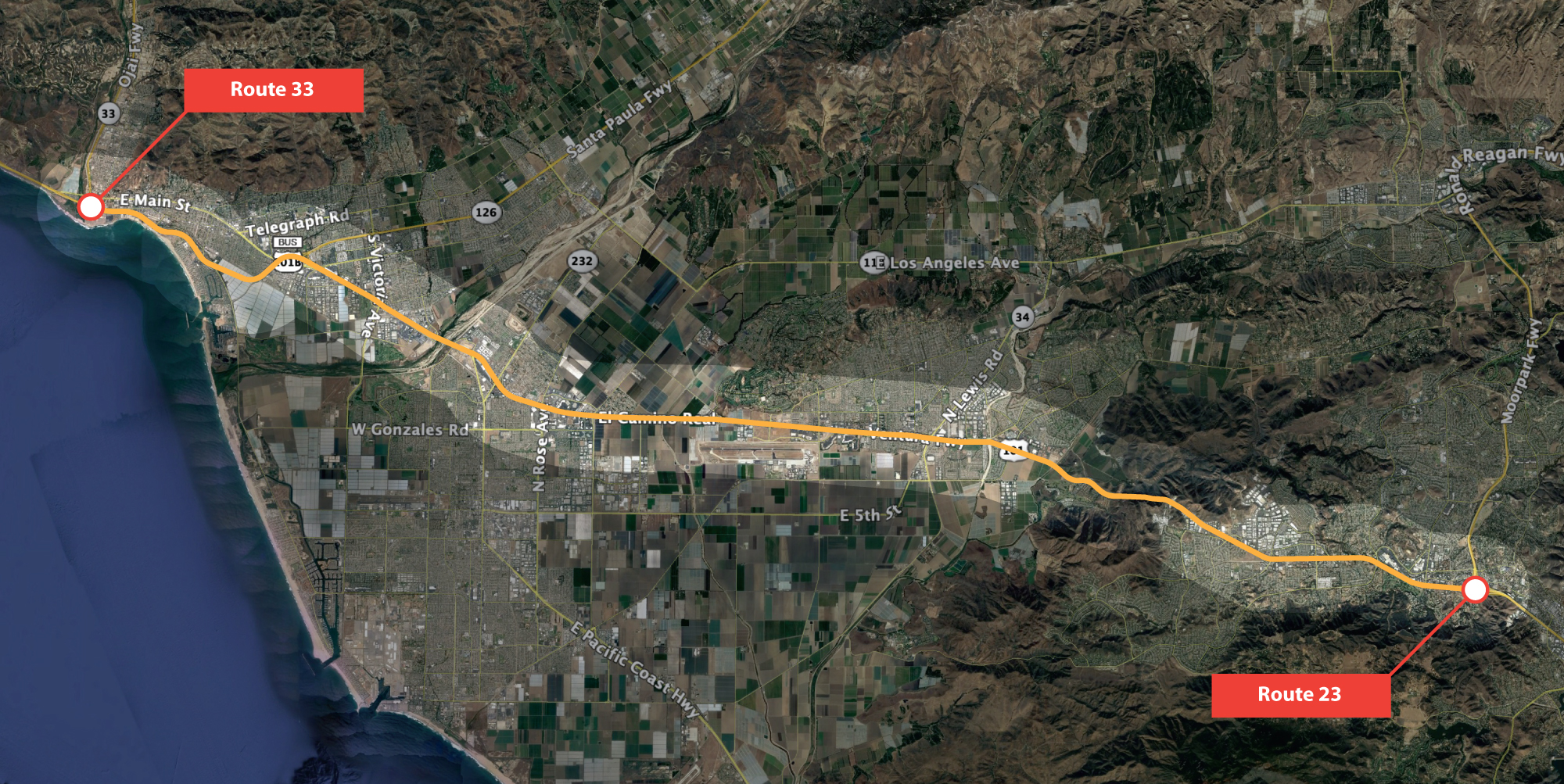
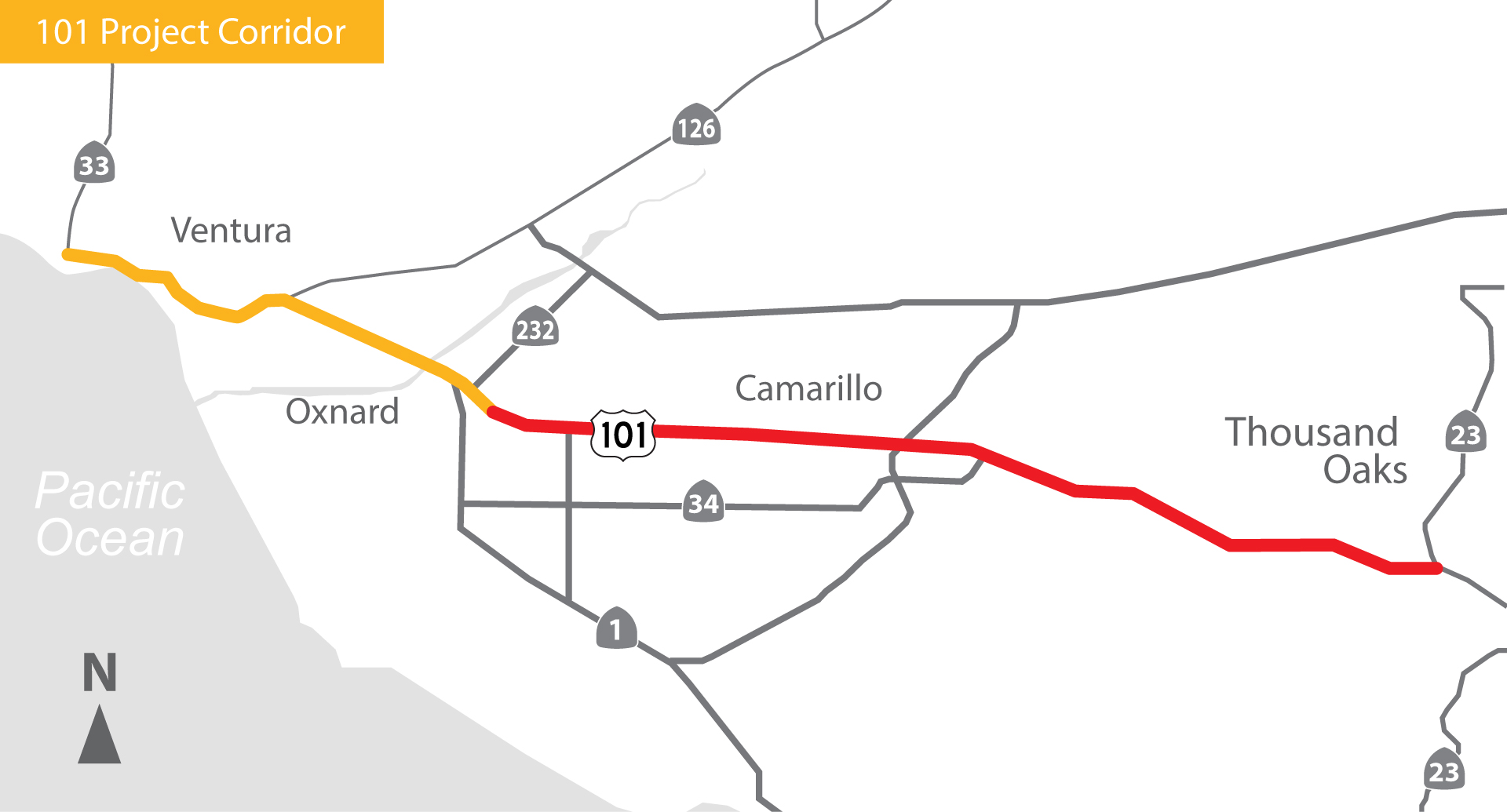
VCTC plans, funds, and manages projects designed to keep Ventura moving. When it comes to Our Future 101, VCTC will be studying alternatives along a twenty-seven-mile stretch between State Route 23 in Thousand Oaks to State Route 33 in Ventura.
The goal of the 27-mile project is to improve the existing infrastructure and reduce congestion, enhance traffic operations, allow for future traffic volume, while minimizing environmental impacts.
VCTC believes that congestion can be reduced significantly by:
- Applying strategies to improve traffic operations
- Eliminate dangerous traffic merges
- Make room for car pools and buses
These types of improvements will not only handle the growth that has already occurred but the growth yet to come. The ultimate result? A freeway that moves people efficiently and safely to all the places they want to go. Improving the quality of life for those, especially in Ventura County, who use the 101 every day.
Project partners
The Ventura County Transportation Commission (VCTC), working in partnership with Caltrans and our local cities and County, are all working together to review and plan our future 101 improvements along this important highway.
Development partners
VCTC and Caltrans, working in partnership to develop solutions to the overwhelming congestion problems along the 101 corridor in Ventura County.
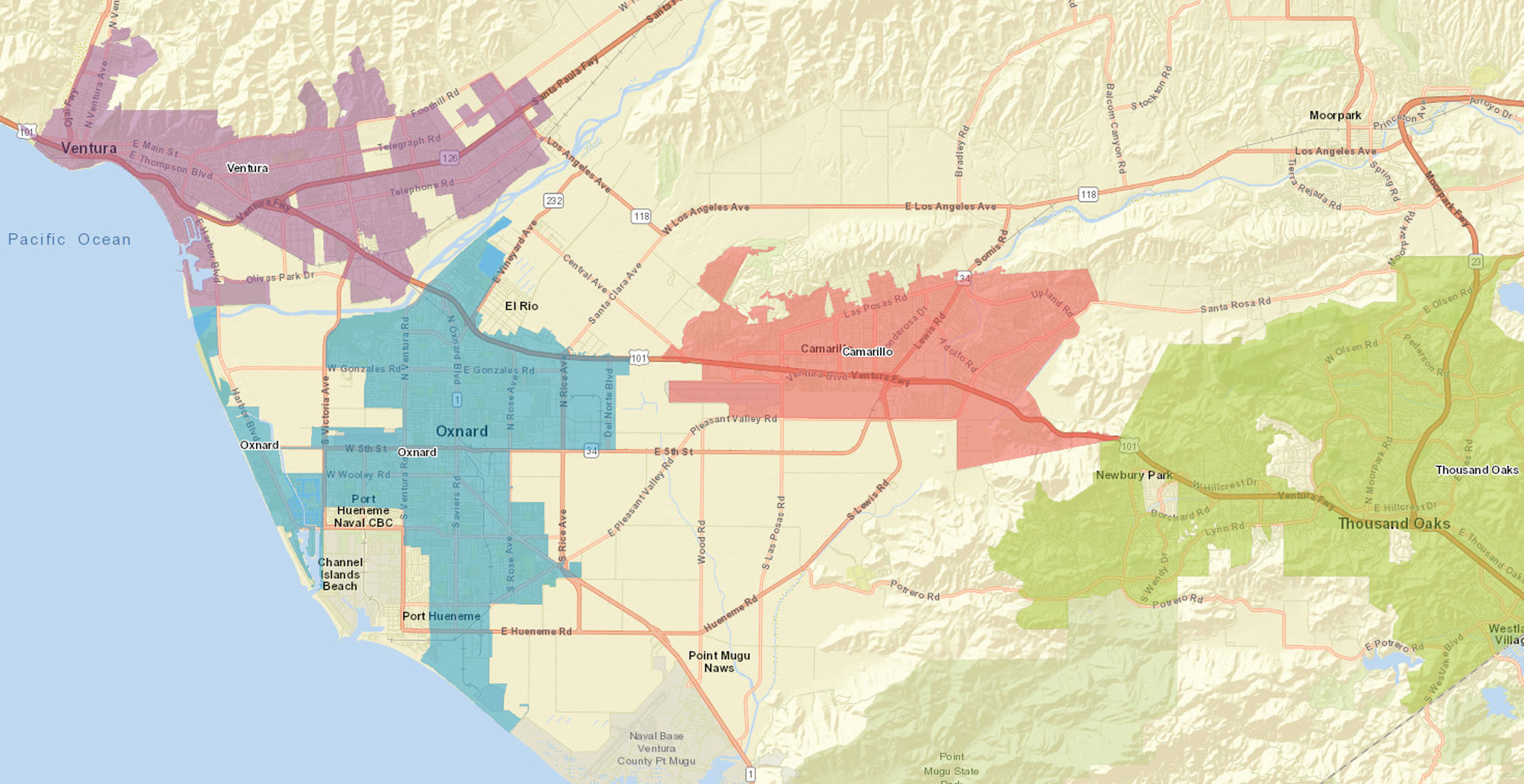
Corridor cities
Our Corridor Communities are cities that are the most directly impacted by congestion, noise, dust and eventual construction on a daily basis.
All impacted cities
All cities within Ventura County are impacted in some way by the congestion on the 101. With residents using the corridor on a daily basis for the purposes of commuting to work, travel, goods movement, and many more, it is the goal of the project study to maximize participation from residents throughout the entire County.
The corridor
The 101 is both a local and an inter-county connector for citizens of Ventura County, the adjacent counties (Santa Barbara and Los Angeles) as well as long-haul travelers (both commercial and recreational).
It connects the cities of:
- Thousand Oaks
- Camarillo
- Oxnard
- Ventura
But it also is the main inter-regional route for all Ventura County cities.
27 miles
State Route 23 in Thousand Oaks to State Route 33 in Ventura
4 cities
Thousand Oaks, Camarillo, Oxnard and Ventura sit on the corridor
No parallel route
Nothing else runs the full length of the project area
There are no contiguous parallel routes that extend the entire length of the project area from SR 23 to SR 33. The 101 is the main way that people travel between Ventura, Oxnard, Camarillo and Thousand Oaks. Which is why it is so congested.
Congestion today
Currently the 101 experiences congestion in both the morning and afternoon:
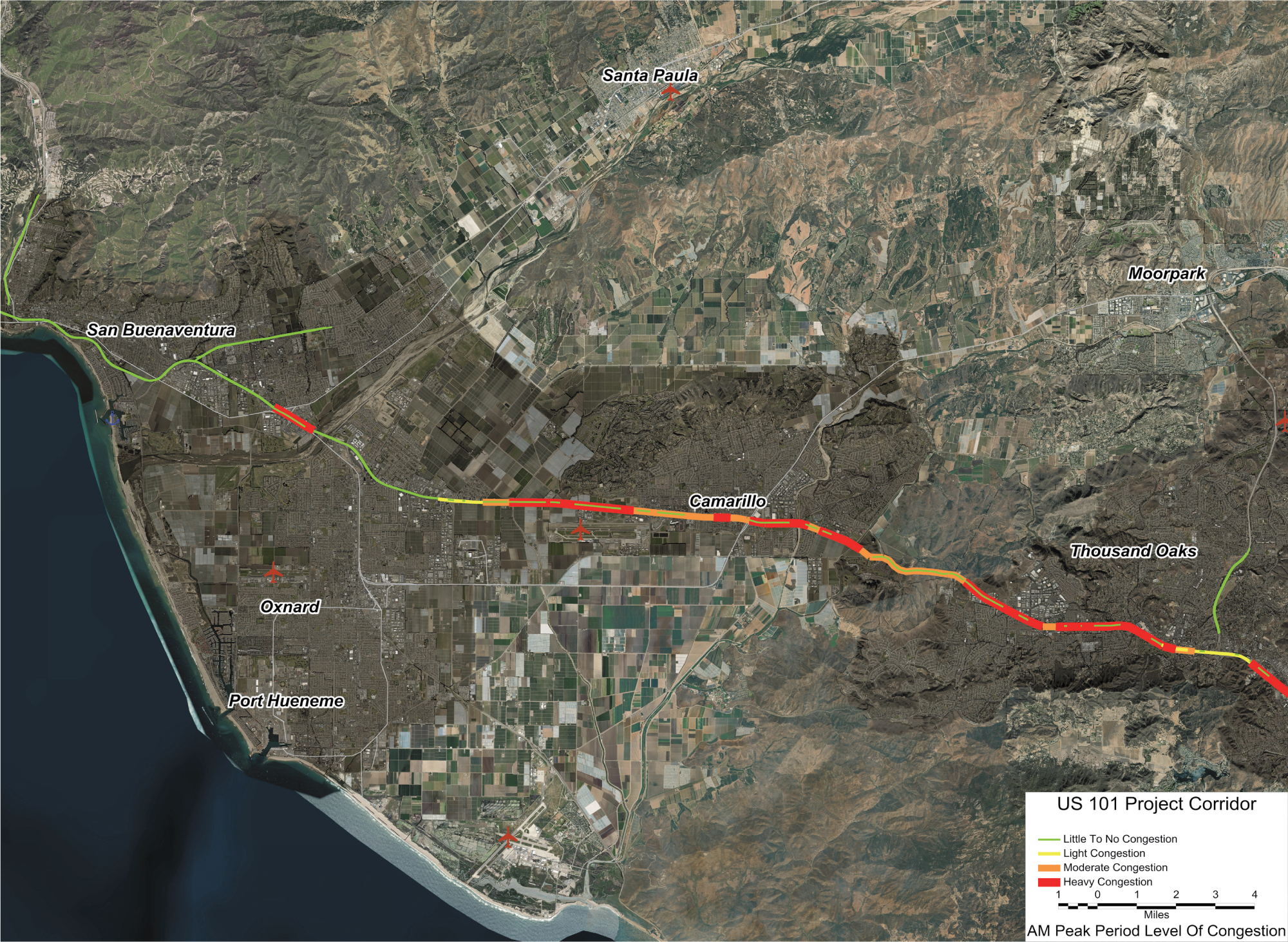
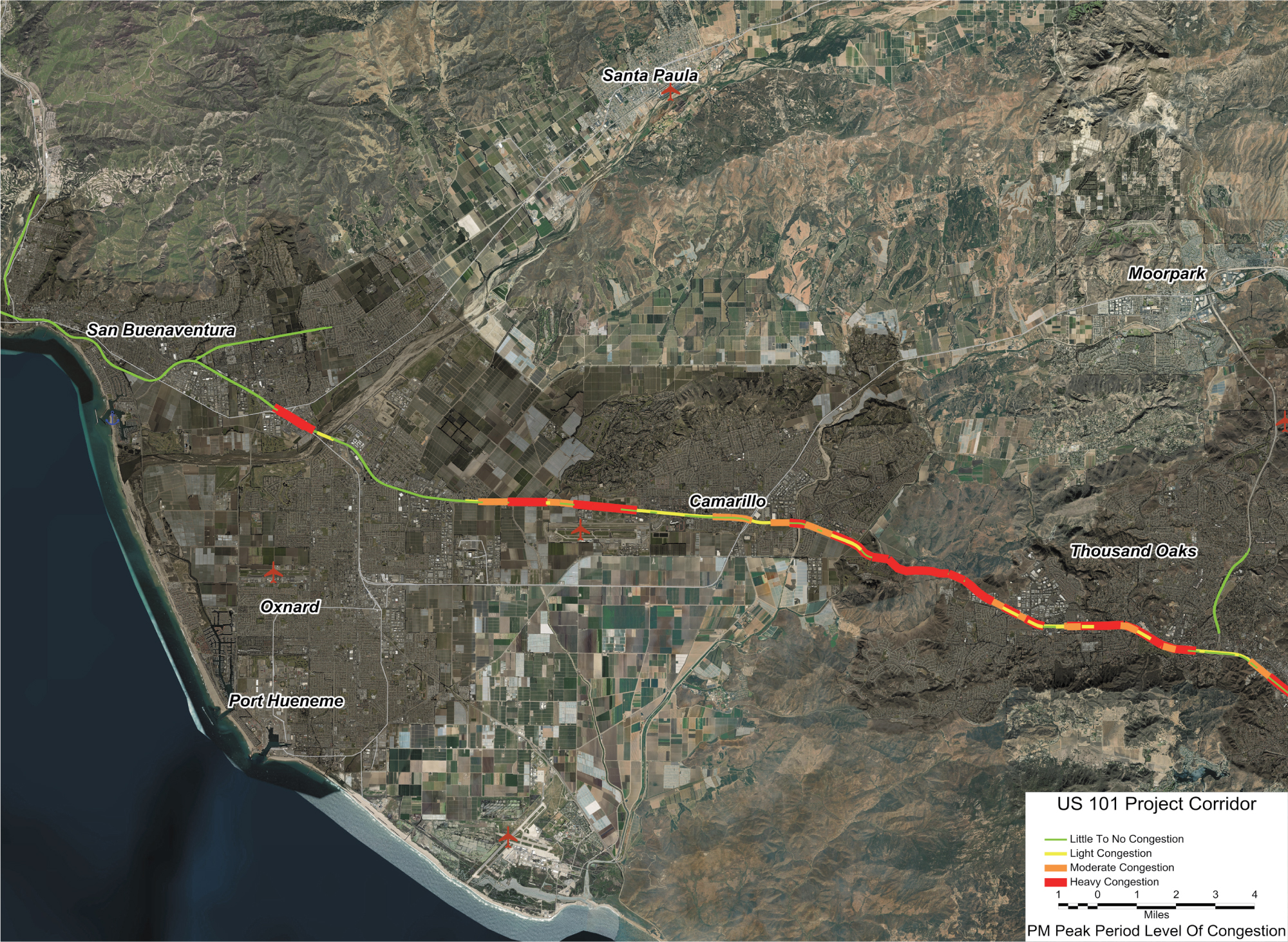
The red sections of these maps equate to 19,800 hours of delay every day.
19,800 hours
of delay on the corridor every day, today
Congestion in 2040
With the anticipated jobs and population growth in Ventura County, the congestion will only get worse:
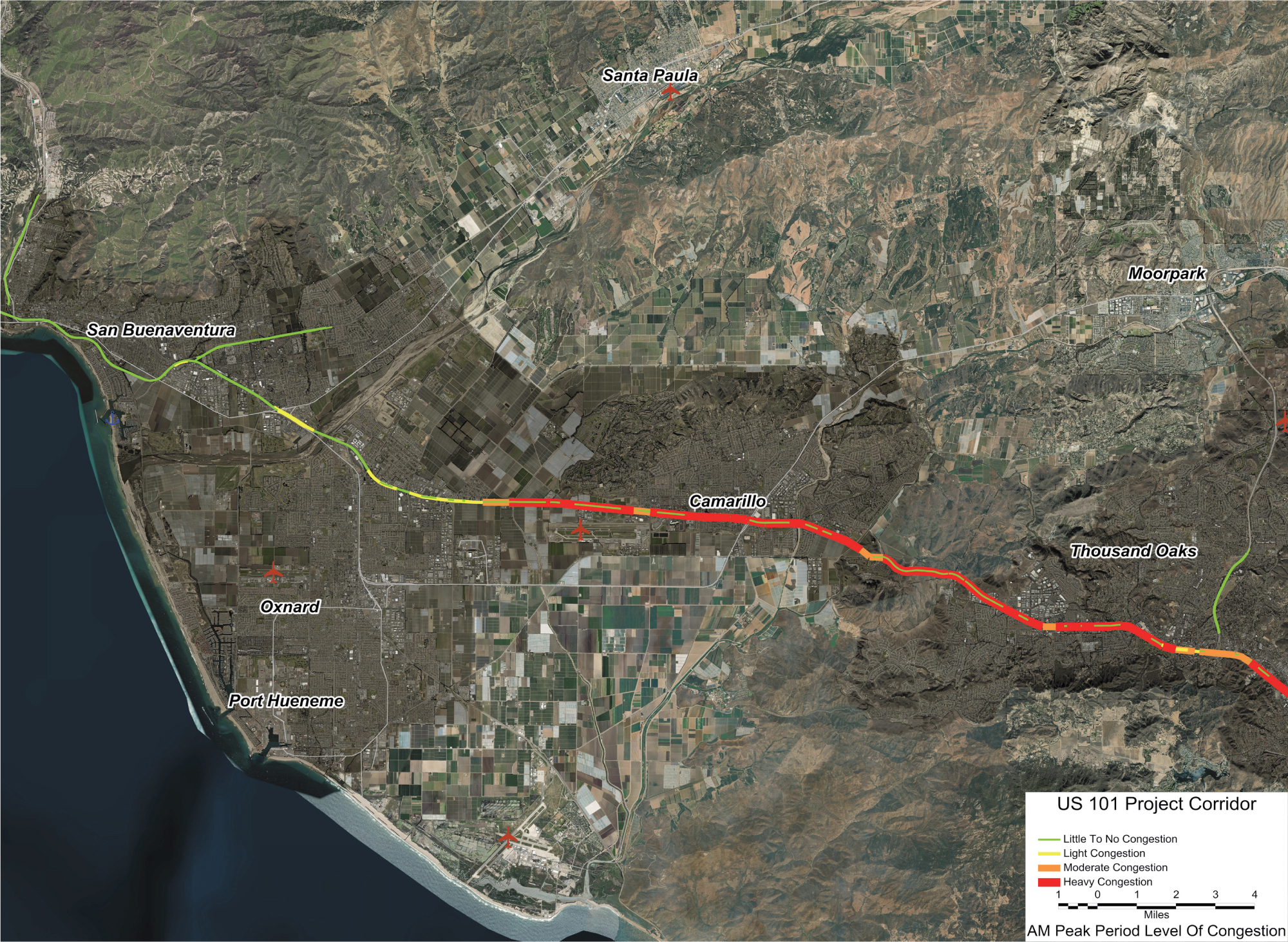
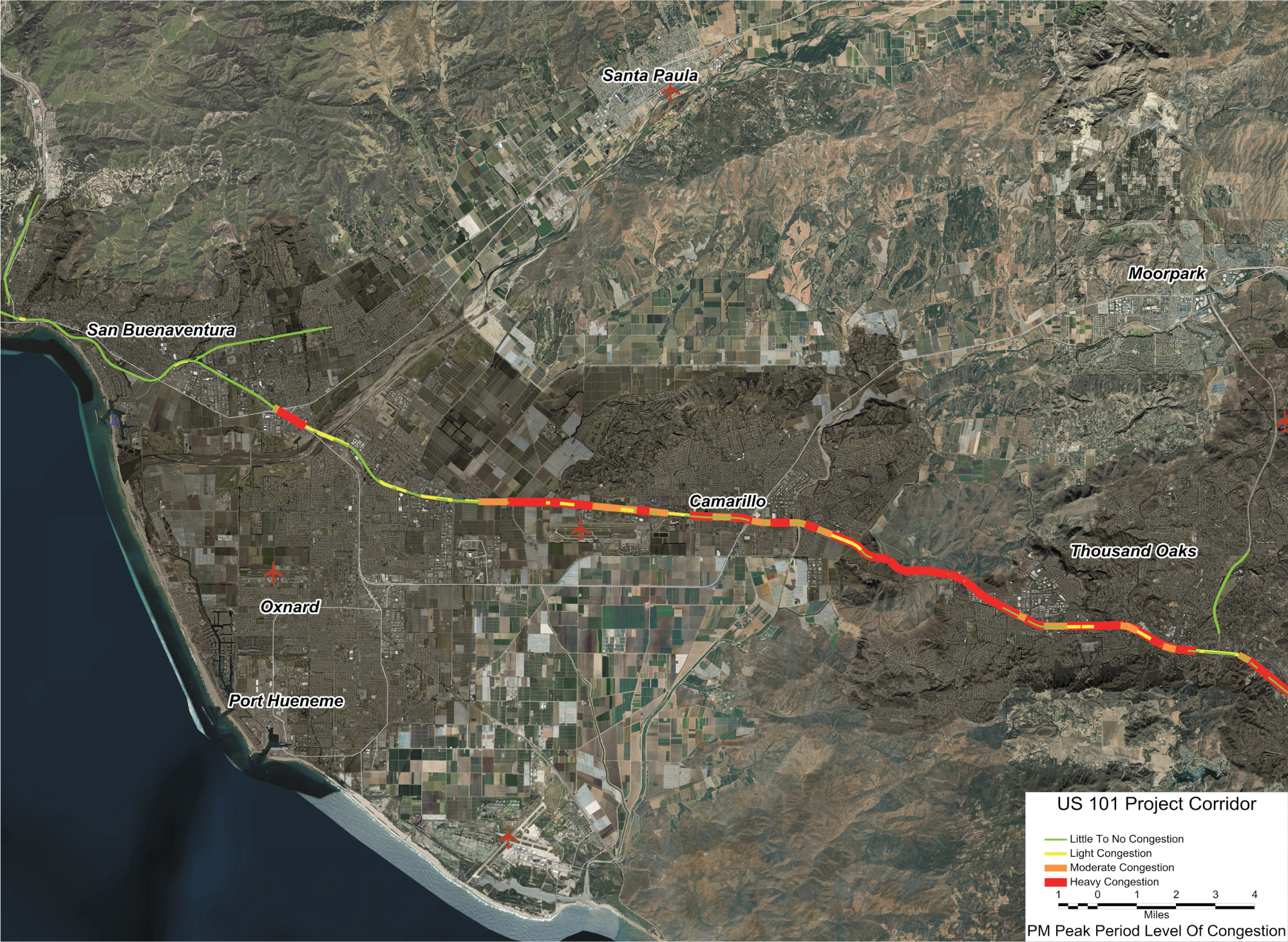
And delay will increase by 54% to 30,500 hours of delay every day.
30,500 hours
of daily delay forecast by 2040, up 54%
Near or over capacity
in the peak hour from SR 23 to SR 232 by 2040
The 101 is forecast to be near or over capacity in the peak hour from SR 23 to SR 232 by 2040.
Communities along the corridor
Preserving the quality of life. That’s the commitment the VCTC makes to the community of Ventura County. Continually improving the local transportation system, maintaining our ranking as one of the best places to live, and giving residents easy access to local travel, the VCTC plans, funds, and manages a wide array of projects designed to keep Ventura moving.
The Ventura County Transportation Commission is currently in the planning stage for this momentous project. Individual interactive story maps help illustrate and visualize traffic impacts and projections for each of our valued cities along our 101 freeway. These story maps are infused with local data and traffic studies to better understand the current and future 101 traffic models and improvements needed.
Each community along the way will present unique challenges but VCTC’s vision remains the same along every mile: with community support, we will improve the mobility of everyone who travels along this vital route — tomorrow, and far into the future. This is Our Future 101, so let’s keep Ventura County moving forward!
How a project gets built
A project goes through many steps before turning the first shovel of dirt.
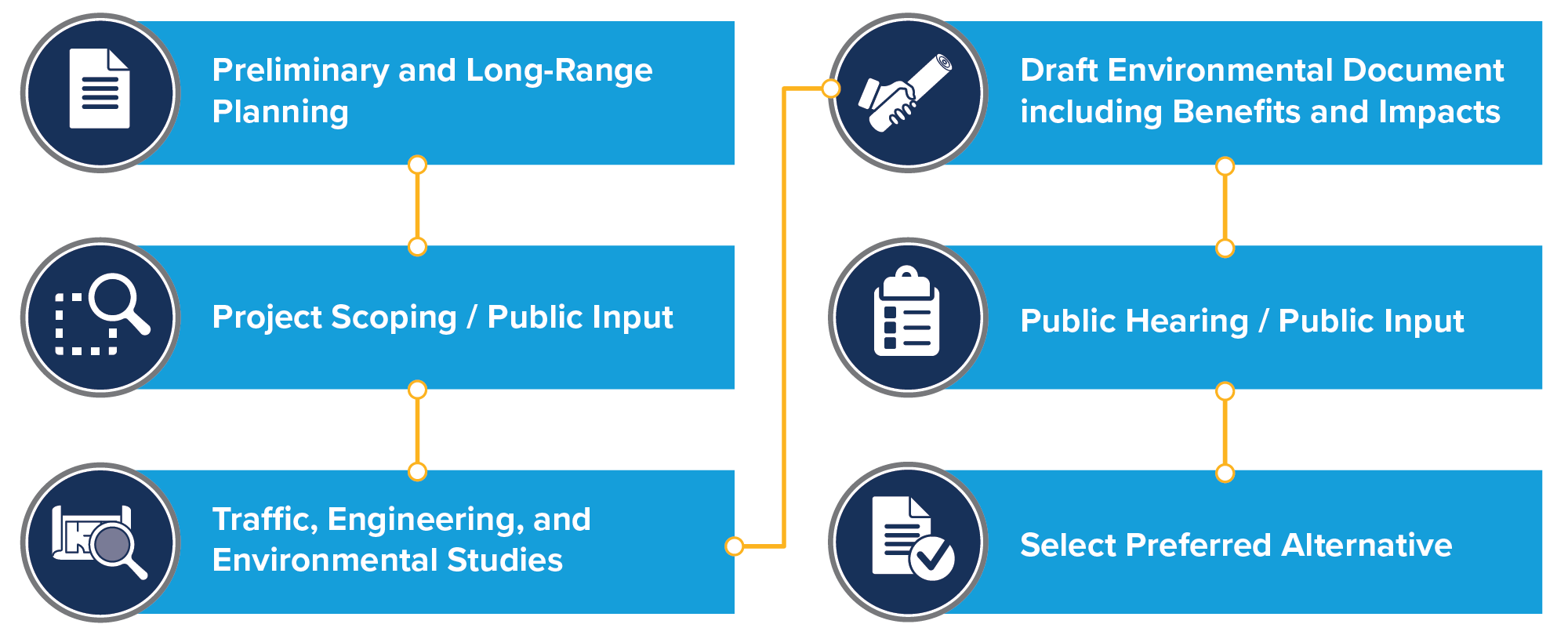
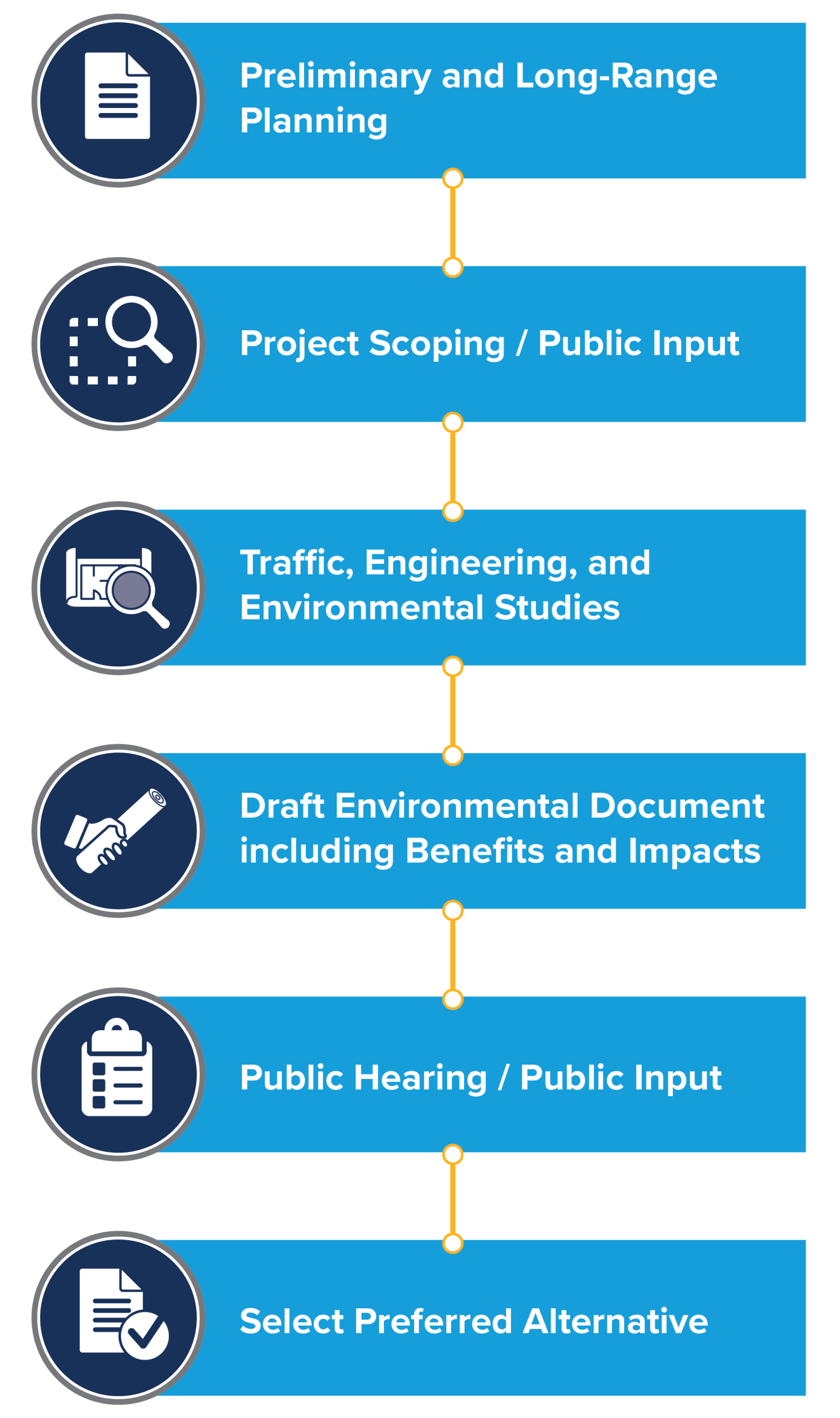
So far, Caltrans has completed Preliminary and Long-Range Planning, listening to the people who use the 101 every day – you, the driver. A series of public scoping meetings were held to hear from the people who live, work, and play near the 101 about their daily experiences with the freeway, considering:
- Where is the 101 congested and where isn’t it?
- Are there traffic hotspots that cause the biggest problems or are there just too many cars on the 101?
- Does traffic on the streets cause backups on the ramps or does traffic on the ramps cause backups on the streets?
- What other options do you use besides driving in a car on the 101?
- What is the one most important thing to fix on the 101?
Following public scoping:
- Traffic, engineering and environmental studies were conducted to evaluate the possible alternatives.
- An environmental document has been prepared that describes the benefits and impacts of the alternatives that were studied.
- That report is now available to the public for review and comment.
- Following the public comment period, VCTC and Caltrans will select a preferred alternative.
Initial planning
The process is about developing the best alternative and through the scoping process we received ideas about what that should be. The early Project Study Report (PSR) prepared by Caltrans evaluated four alternatives:
PSR Alternative 1: Existing / no build
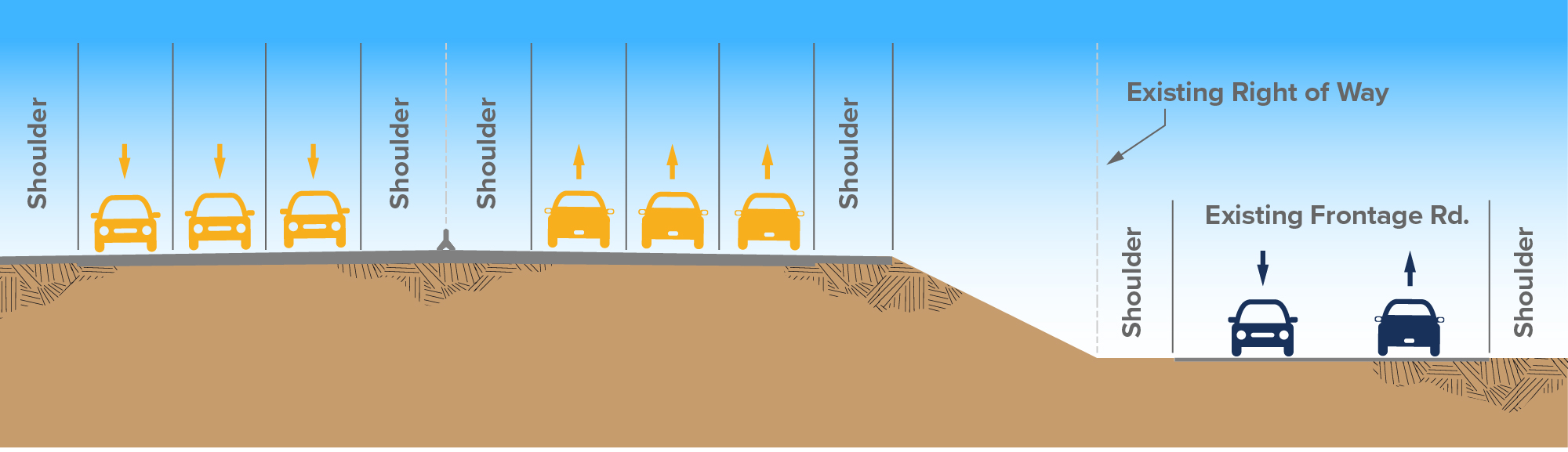
No Build.
PSR Alternative 2: Non standard HOV lane
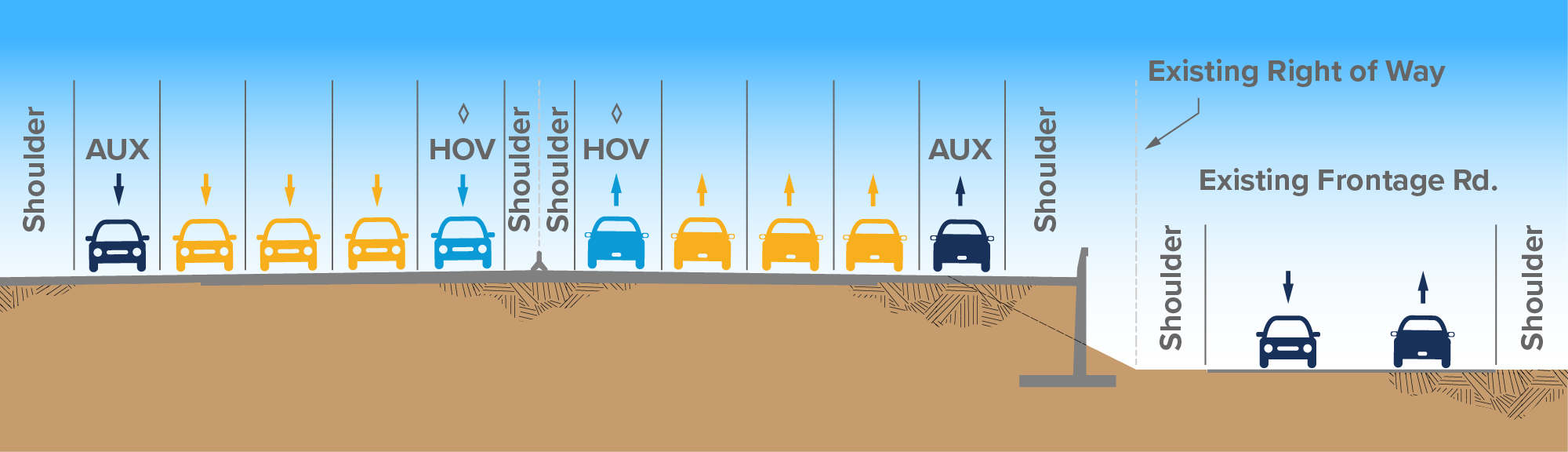
Add one HOV lane in each direction with minimal left shoulders to limit widening.
PSR Alternative 3: Standard HOV lane
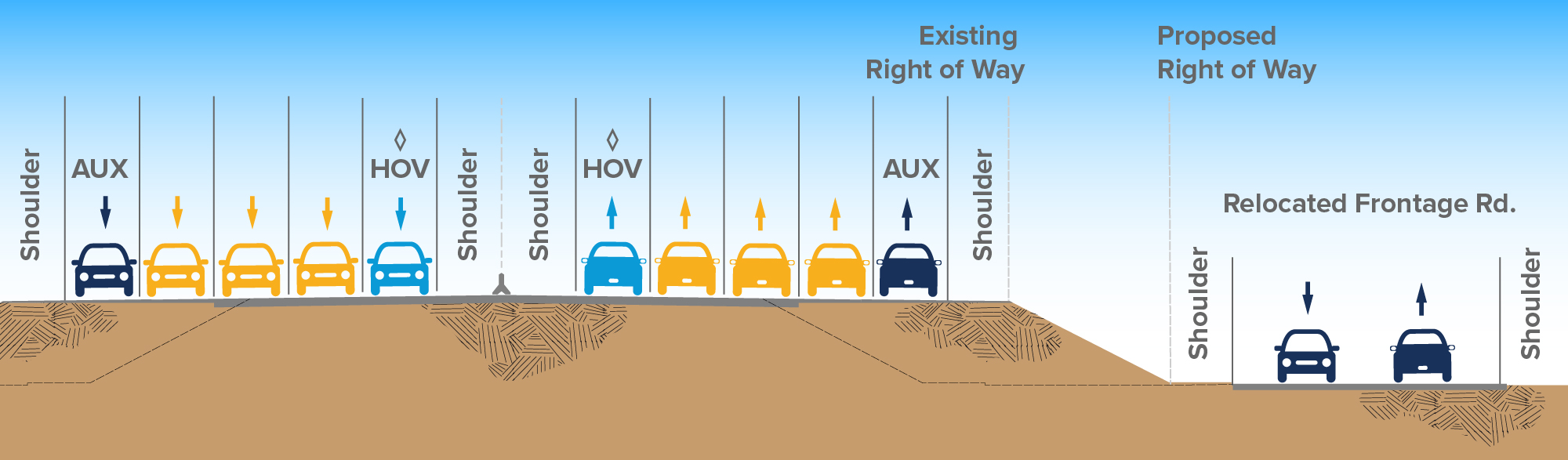
Add one HOV lane in each direction with typical 10-foot left shoulders; requires some widening and replacement of bridges over the 101.
PSR Alternative 4: Two HOV lanes
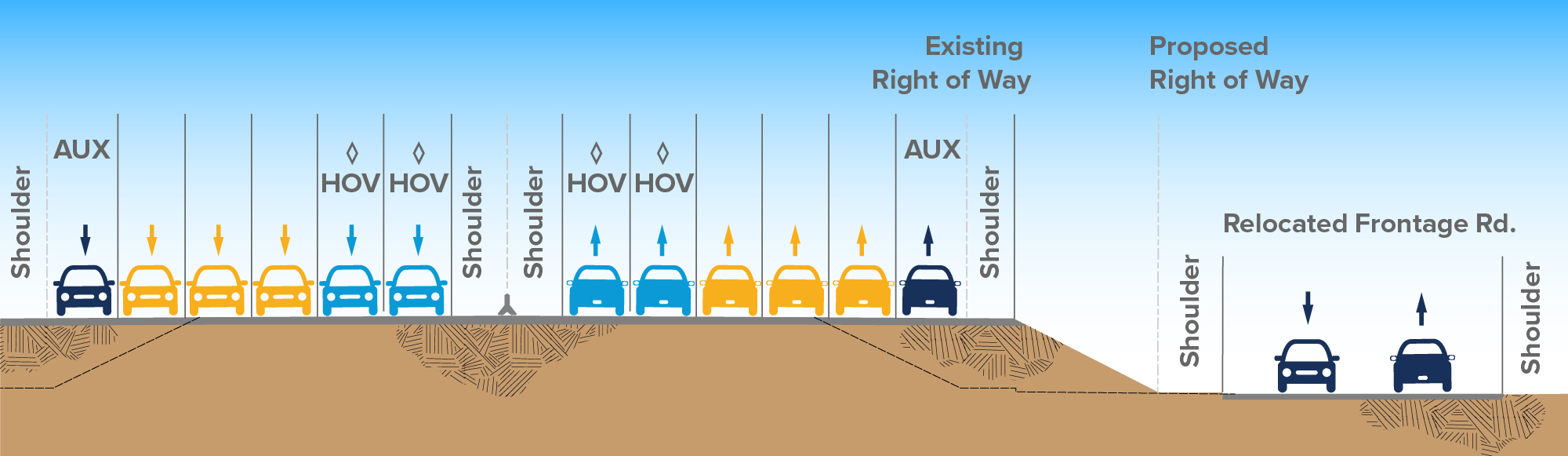
Add two HOV lanes in each direction with typical 10-foot left shoulders; requires extensive widening and replacement of bridges over the 101.
These alternatives underwent a technical review process. The results of that review, along with the public input from the scoping meetings have resulted in two alternatives that have been studied in greater detail in the environmental document.
Next steps
The two build alternatives that were found to reduce congestion and move the most people have been studied in greater detail in the environmental document. The alternatives studied in the draft environmental document are:
- Alternative 1: No Build
- Alternative 2: Add an HOV/Express Bus Lane in each direction
- Alternative 3: Add an HOV/Express Bus Lane in each direction, with design variations
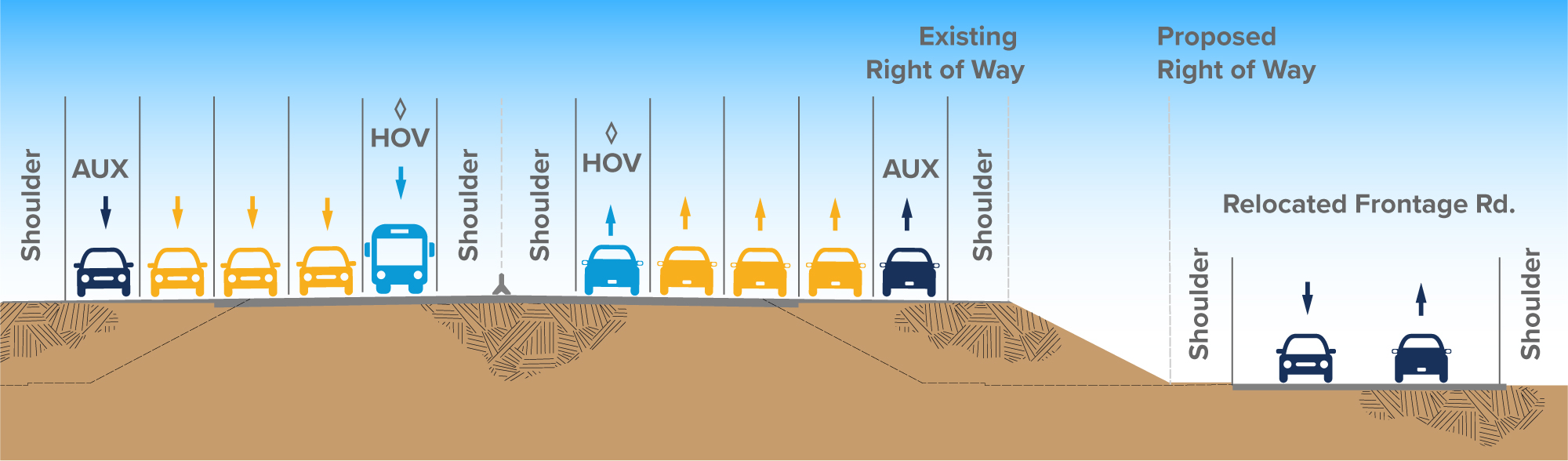
Traffic, engineering, and environmental studies of these three alternatives have been conducted to help understand their benefits and impacts.
Project timeline
The project is moving through environmental review. Milestones and timing below are from the project fact sheet.
| Milestone | Timing |
|---|---|
| Engineering Technical Studies | 2021–2024 |
| Environmental Technical Studies | 2023–2025 |
| Draft Project Report | Summer 2026 |
| Draft EIR/EA | Summer 2026 |
| Public Circulation | Fall 2026 |
| Selection of Locally Preferred Alternative | Winter 2026 |
| Early Action Phasing Strategy | Winter 2026 |
| Final EIR/EA | 2027 |
| Final Project Report | 2027 |
Public Circulation, Selection of the Locally Preferred Alternative and the Early Action Phasing Strategy are the next steps in the process.
The Draft EIR/EA is out for a 60-day public review from Wednesday, September 30, to 11:59 p.m. on Monday, December 7, 2026. Five public hearings will be held in November 2026; dates and locations are listed under Get Involved.
Stay connected
As this project progresses, our goal is to maintain critical on-going communications with local residents, stakeholders, and commuters. We will be presenting alternatives and solutions during the design process to help you continue to have easy access to jobs, schools, shopping, recreation and other essential services. We invite you, the residents of Ventura County, to learn more, share your insights and stay informed about Our Future 101. Please sign up for text alerts and emails through our secure contact form.
We invite you to learn more, share your insights and stay informed about Our Future 101.
Also follow us on Instagram.
VCTC, Our Future 101 Improvement Project — Keep Me Informed
Public scoping meeting presentation
If you were unable to attend any of the four Public Scoping Meetings, you may view the presentation below.
Events
Upcoming public hearings
Public hearings on the Draft EIR/EA will be held at the dates and locations below. You can give comments in person at any hearing, or submit them in writing until 11:59 p.m. on Monday, December 7, 2026.
Thousand Oaks Civic Arts Center
Founders Room
2100 Thousand Oaks Blvd, Thousand Oaks, CA 91362
Wednesday, November 4, 2026, 5:30–7:30 p.m.
Oxnard Performing Arts Center
Ventura Room
800 Hobson Way, Oxnard, CA 93030
Thursday, November 12, 2026, 5:30–7:30 p.m.
Virtual public hearing
Online on Zoom: join the meeting
Meeting ID: 846 6484 0634
By phone: 1 (669) 444-9171
Saturday, November 14, 2026, 10:30 a.m.–12:00 p.m.
Camarillo Library
Community Room
4101 Las Posas Rd, Camarillo, CA 93010
Wednesday, November 18, 2026, 5:30–7:30 p.m.
Ventura City Hall
Community Room
501 Poli St, Ventura, CA 93001
Thursday, November 19, 2026, 5:30–7:30 p.m.
How to comment
Email your comments to Susan.Tse@dot.ca.gov with “US 101 HOV EIR/EA” in the subject line, or mail them to:
Susan Tse Koo
Senior Environmental Scientist
California Department of Transportation
Division of Environmental Planning
100 South Main Street, MS 16A
Los Angeles, CA 90012
Comments must be received by 11:59 p.m. on Monday, December 7, 2026. For questions about the project, email info@ourfuture101.org.
Past events
- Public scoping meetings, April 2019 — Ventura City Hall (April 16), Oxnard Performing Arts Center (April 17), Thousand Oaks Civic Arts Center (April 18), and Camarillo Library (April 22). The presentation is available above.
- Project update to the VCTC Board — Friday, October 4, 2019, Camarillo City Hall Council Chambers.
- Project update to the VCTC Board — Friday, July 10, 2020 (meeting agenda).
- Project updates to the VCTC Board — fall 2019 through fall 2020.
Newsroom
The Ventura County Transportation Commission (VCTC) recognizes that the 101 is congested and needs to be addressed. The purpose of this project is to:
- Reduce existing congestion
- Improve traffic operations
- Accommodate future traffic volumes forecasted in this area
With this in mind, this project may include some of the following:
- Additional lanes on the 101 freeway designated for high-occupancy vehicles (HOVs), also known as carpools
- Auxiliary lanes between interchanges
- On-ramp or off-ramp improvements
- Ramp intersection improvements
The Ventura County Transportation Commission (VCTC) is the project sponsor. VCTC is working in partnership with the California Department of Transportation (Caltrans), which will be the lead agency for the development of a combined California Environmental Quality Act (CEQA) Environmental Impact Report (EIR) / National Environmental Policy Act (NEPA) Environmental Assessment (EA).
The Federal Highway Administration (FHWA) has an oversight role because this project proposes to make improvements to a federal route (US 101). The four Ventura County cities (Camarillo, Thousand Oaks, Oxnard and Ventura) through which US 101 passes and the County of Ventura are represented on the Project Development Team to guide the preparation of the EIR/EA. Many other state and federal agencies are consulted during the development of this project.
Congestion in the project area is already bad. The population in the region has grown by 45% since 1990 and is projected to continue to grow although at a slower pace. Currently, the 101 operates at Level of Service (LOS) C to LOS F in the morning and evening peak periods, which means that cars are not moving at free flow speeds.
- A high-occupancy vehicle lane, or HOV lane, is another name for a carpool lane. Carpool lanes are sometimes known as diamond lanes because painted diamonds differentiate HOV lanes from general purpose lanes.
- General purpose lanes are intended for general use with no specific designation for the type of vehicle or the operational characteristics of the lane. Truck lanes are intended for trucks, and HOV lanes are intended for HOVs.
- Auxiliary lanes allow vehicles to enter and exit the flow of traffic between interchanges without impacting the speed in the general purpose lanes. They begin where an on-ramp joins the freeway and end where an off-ramp exits the freeway and are sometimes referred to as acceleration or deceleration lanes.
The Project Development Team has chosen three alternatives to move into the next step. These alternatives are:
- Alternative 1 – No Build
- Alternative 2 – Add an HOV/Express Bus Lane in each direction
- Alternative 3 – Add an HOV/Express Bus Lane in each direction, with design variations
In general, the alternatives were structured to gain the greatest improvement in traffic conditions and safety levels relative to the costs involved.
HOV lanes move more people in fewer cars traveling at higher speeds than general purpose lanes. HOV lanes are being considered to minimize the impact of improvements. HOV lanes do not currently exist in the project area. The addition of HOV lanes also provides a new option for an improved trip. Buses (including inter-city buses) are high-occupancy vehicles and can use the HOV lanes, which removes them from the general purpose lanes, providing them with a shorter and more reliable trip time compared to general purpose lanes and making transit service more attractive to commuters and travelers.
A general purpose lane alternative was evaluated in the alternatives analysis phase. The width of a general purpose lane alternative is similar to the width of Alternatives 2 and 3, and as such, the physical impacts and cost of a general purpose lane alternative are similar to Alternatives 2 and 3. A general purpose lane does not move as many people as quickly or reliably as an HOV lane alternative. For those reasons it was eliminated from further consideration.
Construction cost estimates range from $1.8 billion to $2.3 billion depending on the alternative. These cost estimates will continue to be refined as the project progresses.
This current phase of the project is funded through Ventura County’s share of federal Surface Transportation Block Grant (STBG) funds, formerly known as Surface Transportation Program (STP) funds. Design and initial construction will be funded by Ventura County’s share of STBG and State Transportation Improvement Program (STIP) funds. Possible future funding sources include Federal and State grants and other local sources.
The environmental document evaluates benefits and impacts in topics such as, but not limited to:
- Aesthetics
- Agricultural Resources
- Air Quality
- Biological Resources
- Community and Neighborhoods
- Construction Impacts
- Cultural and Historic Resources
- Farmlands
- Geology and Soils
- Greenhouse Gas Emissions
- Growth
- Hazards and Hazardous Materials
- Hydrology and Water Quality
- Land Use and Planning
- Land Acquisitions, Displacement and Relocation
- Noise and Vibration
- Paleontological Resources
- Parks and Recreation Areas
- Public Services
- Transportation/Traffic
- Tribal Cultural Resources
- Wildfire
All of these study topics as well as public comments on the draft EIR/EA will contribute to the overall decision on a preferred alternative.
All property that will potentially be impacted has been identified during the preparation of the environmental document. Properties that are anticipated to be impacted by the project are identified in Section 2.2.8, Relocations and Real Property Acquisition, in Chapter 2 of the draft EIR/EA. It will not be known for certain which properties will be impacted until an alternative is selected, and the project proceeds to the final design phase.
The benefits and impacts of local interchange and ramp improvements were evaluated at locations where the project causes traffic growth or where improvements on the freeway general purpose lanes require realignment of ramps. However local intersections are not being impacted or modified.
The project will be built over the course of many years. Construction will be phased, but the plan for construction phasing has not been finalized. Construction phases will depend on highway operations and timing of funding availability.
Because of the scale of the project and the amount of money it will take to pay for the construction, VCTC currently estimates that construction will be complete by 2040. If full funding is available sooner, then construction will start sooner. Initial funding for construction is programmed for Fiscal Year 2031. The actual construction period can only be determined once an alternative has been selected and the construction funding plan is determined.
A decision on the preferred alternative is currently anticipated in 2027 after circulation of the draft EIR/EA.
Based on the project development process, the project is currently in the Project Approval and Environmental Document phase. In this phase, each of the three alternatives have been analyzed based on specific evaluation criteria to help gather information needed to choose one final alternative. A draft EIR/EA, also referred to herein as “environmental document,” has been prepared and will be released for public review and comment on Wednesday, September 30, 2026. A 60-day public review period will start September 30, 2026 and end December 7, 2026. Public hearings will be held at the locations listed under Get Involved.
VCTC believes public comments are a vital component of the environmental study process and inform decision makers on how Ventura County residents feel about this project and its components. Public input allows for a more holistic project design that better addresses the needs of the public. Public comments can be submitted via the project website, or mailed to:
Susan Tse Koo, Senior Environmental Scientist
California Department of Transportation
Division of Environmental Planning
100 South Main Street, MS 16A
Los Angeles, CA 90012
or via email to Susan.Tse@dot.ca.gov. Comments must be received by 11:59 p.m. on Monday, December 7, 2026.
Feel free to email questions about the project at info@ourfuture101.org.
See the Get Involved tab for information on upcoming public hearings and engagement opportunities.
Feedback provided by stakeholders and the general public allowed for the consideration of alternatives beyond those presented in the public scoping meetings. While only the No Build and two Build Alternatives are proceeding for further study, many alternatives were considered and reviewed during the alternatives analysis phase to ensure the two build alternatives best meet the purpose and need of the project.
The US 101 Improvement Project considered city plans for bicycle (and pedestrian) facilities on local streets. In locations where construction will occur on local streets, and where planned facilities are consistent with Caltrans standards (sidewalks, required shoulders that could be used as bike lanes), the US 101 Improvement Project will include them for the safety of all users including drivers, pedestrians and bicyclists. In addition, VCTC adopted the 101 Communities Connected Multimodal Corridor Study in 2021, which evaluates existing and future multimodal transportation networks along with recommendations for and phasing of improvements. Projects and strategies from 101 Communities Connected are incorporated into the proposed mitigation program for the 101 Improvement Project.
The environmental study and documentation process address both impacts to the natural environment and the built environment. The project team followed the guidelines set forth by CEQA and NEPA.
As part of the development of the environmental document, the project team studied potential impacts to both cultural and historic resources located along the project corridor. The potential for these resources to be impacted is disclosed to the public within the environmental document.
The US 101 Improvement Project considers how improvements will benefit or impact all users, including the public transportation system. Additionally, other studies address the overall public transportation availability and need throughout the county. The proposed Vehicle Miles Traveled (VMT) mitigation program for the US 101 Improvement Project includes improvements to passenger rail and bus transit. See VCTC’s local bus page for all local transit options.
As a part of the initial planning phase, the design team considered alternatives that were presented at the public scoping meetings and those that resulted from stakeholder and public feedback during the scoping process. The team considered options that include HOV lanes because they address the purpose and need of the project and provide a higher benefit when compared to non-HOV alternatives.
Lighting along the freeway has been considered as a part of potential safety improvements. At ramp entrance and exit locations, safety lighting will be replaced where impacted.
Public transit access to the improved facility was considered to provide US 101 users additional choices in mode of transportation and minimize impact to existing public transit services. Additionally, buses will utilize the HOV lanes thereby removing them from the general purpose lanes and increasing efficiency in reaching destinations.
The project team studied wildlife in the area and the project’s potential impacts as part of the environmental document process. Section 2.4, Biological Environment, in Chapter 2 of the draft EIR/EA, provides information regarding the wildlife studies conducted, potential impacts to biological resources, and measures that have been incorporated into the project to avoid and minimize impacts to biological resources.
As a separate project, through a grant from the Caltrans Sustainable Transportation Planning Grant program, VCTC partnered with the National Park Service to study wildlife movement in the Conejo Pass area, also known as the Conejo Grade. The wildlife tracking study is anticipated to be completed during the Project Approval and Environmental Document phase of the project and any pertinent measures associated with that study will be included in the final EIR/EA for the US 101 Improvement Project.
The project will comply with all local, state and federal ordinances and guidelines pertaining to wildlife movement, specifically the recently approved Habitat Connectivity and Wildlife Corridor Ordinances. How the project interacts/intersects with the recently adopted wildlife corridor ordinance and the potential for conflicts were analyzed. As detailed in Section 2.4.1, Natural Communities, in Chapter 2 of the draft EIR/EA, the project would not conflict with policies and ordinances protecting biological resources, including wildlife crossings. Regional wildlife movement is a growing concern that has been recognized by Caltrans. As part of the development of the draft EIR/EA, project biologists studied wildlife movement throughout the project corridor. Existing wildlife movement, potential project impacts to movement, as well as avoidance and minimization measures, will be a component of the environmental document.
As a separate project, through a grant from the Caltrans Sustainable Transportation Planning Grant program, VCTC partnered with the National Park Service to study wildlife movement in the Conejo Pass area, also known as the Conejo Grade. The wildlife tracking study is anticipated to be completed during the Project Approval and Environmental Document phase of the project and any pertinent measures associated with that study will be included in the final EIR/EA for the US 101 Improvement Project.
Documents
Project documents and environmental materials for the US 101 Improvement Project. Documents are added here as they are published.
Environmental documents
The Draft Environmental Impact Report / Environmental Assessment (EIR/EA) and Draft Section 4(f) Evaluation is available for public review from September 30 through 11:59 p.m. on Monday, December 7, 2026. It comes in two large files: the main report, and its appendices.
Soundwall location figures
Recommended soundwall (noise barrier) heights and locations along the corridor, one set for each build alternative.
Project information
Print-friendly copies of the project fact sheet, frequently asked questions and public hearing postcard.